
Cracks
A crack across the ceiling, along a board joint or around a light.
Steve checks whether the ceiling behind it is still sound. If it is, the crack can often be repaired and skimmed. If it isn’t, it’s better replaced.
Cracked, sagging or old lath-and-plaster ceilings taken down, re-boarded and skimmed, or sound ceilings re-skimmed, by Steve and his own team.
Most ceiling calls start with something you can see from the floor. These are the usual ones, and what Steve looks at when he comes out. JonesBuild also works on Artex and textured ceilings, and coving.
A crack across the ceiling, along a board joint or around a light.
Steve checks whether the ceiling behind it is still sound. If it is, the crack can often be repaired and skimmed. If it isn’t, it’s better replaced.
A dip in the middle of the room, or a section that has dropped.
A ceiling that has come away from what holds it up usually has to come down, then it’s re-boarded and skimmed.
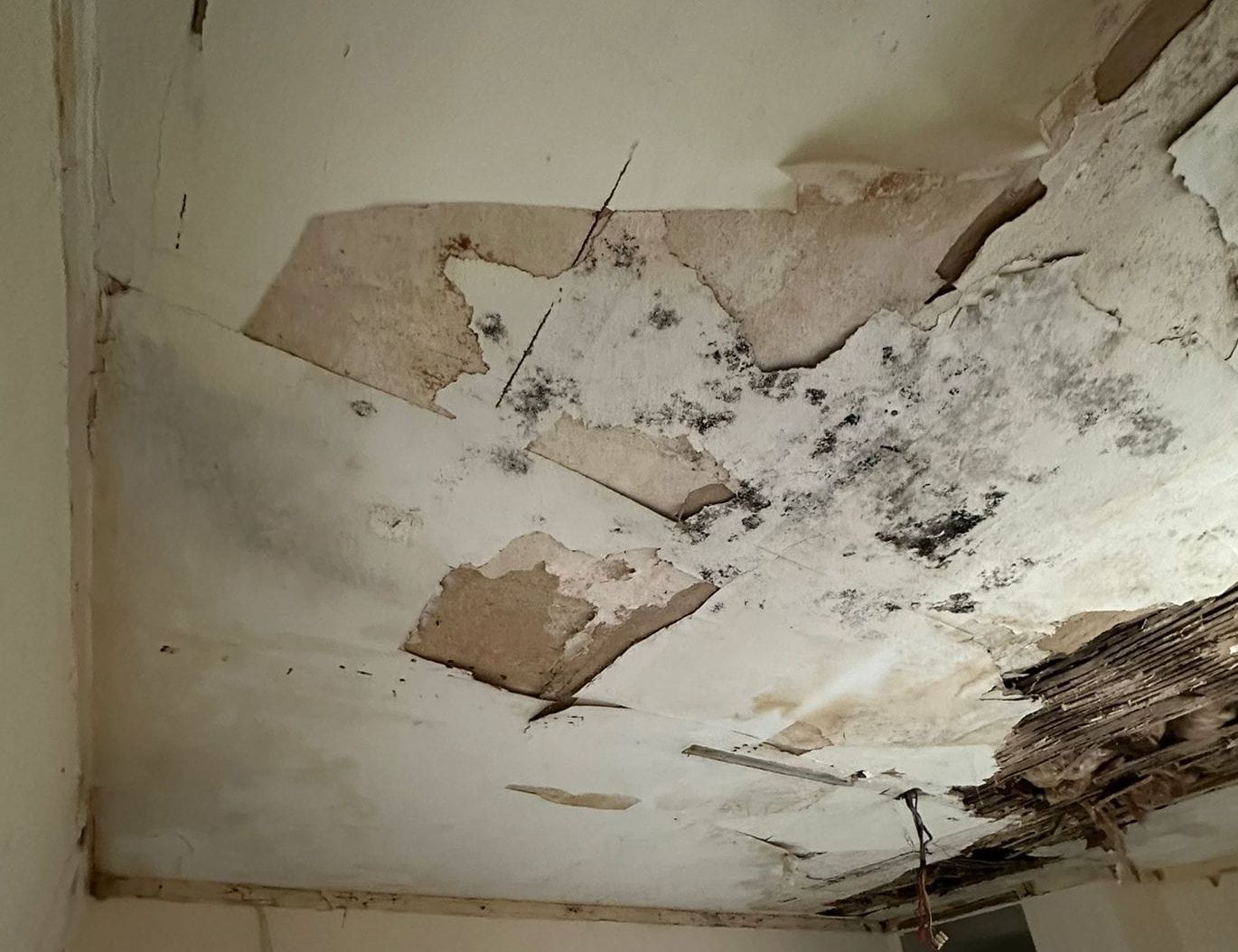
Plaster coming away, or old lath showing through.
Old lath-and-plaster ceilings can be taken down to the joists and replaced with a new ceiling.
Holes and patches left after other trades.
Making good after other trades is part of what JonesBuild does, so the ceiling is left flat and ready to decorate.
The ceiling is sound and firmly fixed, and only the surface is tired or lightly cracked. A fresh skim gives it a smooth finish again.
Where an existing plasterboard ceiling is suitable and doesn’t need to come down, JonesBuild boards over it and skims it. Not every old ceiling can be boarded over, so Steve checks yours first.
The ceiling is sagging, coming away or failed old lath and plaster. It comes down to the joists, then it’s re-boarded and skimmed.
Which one your ceiling needs is decided at the site visit, not over the phone. Steve will tell you what he’d do and why.
The photo at the top of this page is the old lath-and-plaster ceiling in this kitchen-diner. The ceiling was completely stripped back to the joists, then insulated, boarded and skimmed. These two photos look at the same wall.

Down to the joistsCeiling down to the joists, floor dug out

New ceilingThe same wall with a new flat ceiling
The same job also had the floor dug out and screeded and the walls re-plastered. See the whole room on our refurbishments page: taking a whole room back to the joists
A bathroom in a Gloucester period house. The old ceiling was taken down and replaced: the new ceiling was boarded, the board joints were taped with scrim, which helps stop cracks showing along the joints later, and then it was skimmed.

1 · BoardedCeiling boarded, bath under protection

2 · Joints scrimmedBoard joints taped with scrim, ready to skim

3 · SkimmedCeiling freshly skimmed, walls still boarded
The walls in this bathroom were stripped back to the lath, then insulated, boarded and skimmed. That part of the job is on our page about plastering and skimming
The finished room is on our bathroom renovations page.
Steve Jones and his team do the plastering themselves, and qualified trades are brought in for specialist work. The person pricing your ceiling is a qualified plasterer.
Every ceiling is different, but this is the usual order of things.
Ring Steve or use the quote form. A photo of the whole ceiling, plus close-ups of any cracks, dips or stains, helps a lot.
Steve looks at the ceiling and tells you whether it can be repaired and skimmed, boarded over, or needs replacing.
You get a clear written quote and a start date.
The room is cleared or covered and floors are protected. If the old ceiling is coming down, it comes down to the joists. If something unexpected turns up above it, Steve talks it through with you before it’s put right.
The new ceiling is boarded, the joints scrimmed and the whole thing skimmed, and the room is left clean and tidy. It then needs to dry out before it’s decorated.
Historic customer reviews from 2016–2020, when JonesBuild also traded as JCB Property Services.
Our average of the scores on all 83 Checkatrade reviews, 2016–2020. Checkatrade marks 69 of the 83 as verified.
Straight answers, but where it depends on your house, we say so.
It depends on what’s behind the crack. If the ceiling is still sound and firmly fixed, it can often be repaired and skimmed. If it’s sagging, loose or coming away, it’s usually better replaced. Steve will tell you which at the site visit.
Don’t leave it. Keep people and things out from under the sagging part, take a few photos and send them to Steve, or give him a call. He’ll come and look at it and tell you what it needs.
Yes, once the source of the water has been dealt with and the area is suitable for repair. Send Steve a photo of the ceiling as it is now and he’ll tell you whether it can be repaired or needs replacing.
Yes, where it’s suitable. JonesBuild boards over existing plasterboard ceilings where taking them down isn’t necessary, then skims them. Not every old ceiling can be boarded over: if it’s sagging or coming away, it normally has to come down first. Steve will look at yours and tell you what he’d recommend.
It depends on its condition. In the Gloucester kitchen-diner above, the old lath-and-plaster ceiling was completely stripped back to the joists, then insulated, boarded and skimmed.
Very dusty, so the room is cleared or covered and the floors are protected before it starts. The room is out of use while the work is done and the new plaster dries, and it’s left clean and tidy afterwards.
Once the plaster is fully dry, when it has gone from dark and patchy to an even, lighter colour all over. How long that takes depends on the room and the weather, so Steve will tell you when it’s ready.
It depends on the size of the room, whether the old ceiling has to come down and what turns up above it, so any figure here would be a guess. Send Steve a few photos and you’ll get a proper written quote with a start date.
Tell Steve what’s wrong with the ceiling. A photo of the whole ceiling as it is now helps him price it properly.